AJ's Happy Chick Farm | Marketing Conservation
The 2026 Marketing Conservation Cohort was created to help Orleans County farmers share the conservation work already happening on their land. Through the program, OCNRCD partnered with AJ's Happy Chick Farm to dig into their story, explore the practices they use to care for their land and animals, and create new ways to share that work with their community. From rotational grazing and water quality practices to healthy soils, renewable energy, and thoughtful resource use, conservation is woven throughout the way AJ's Happy Chick Farm operates.
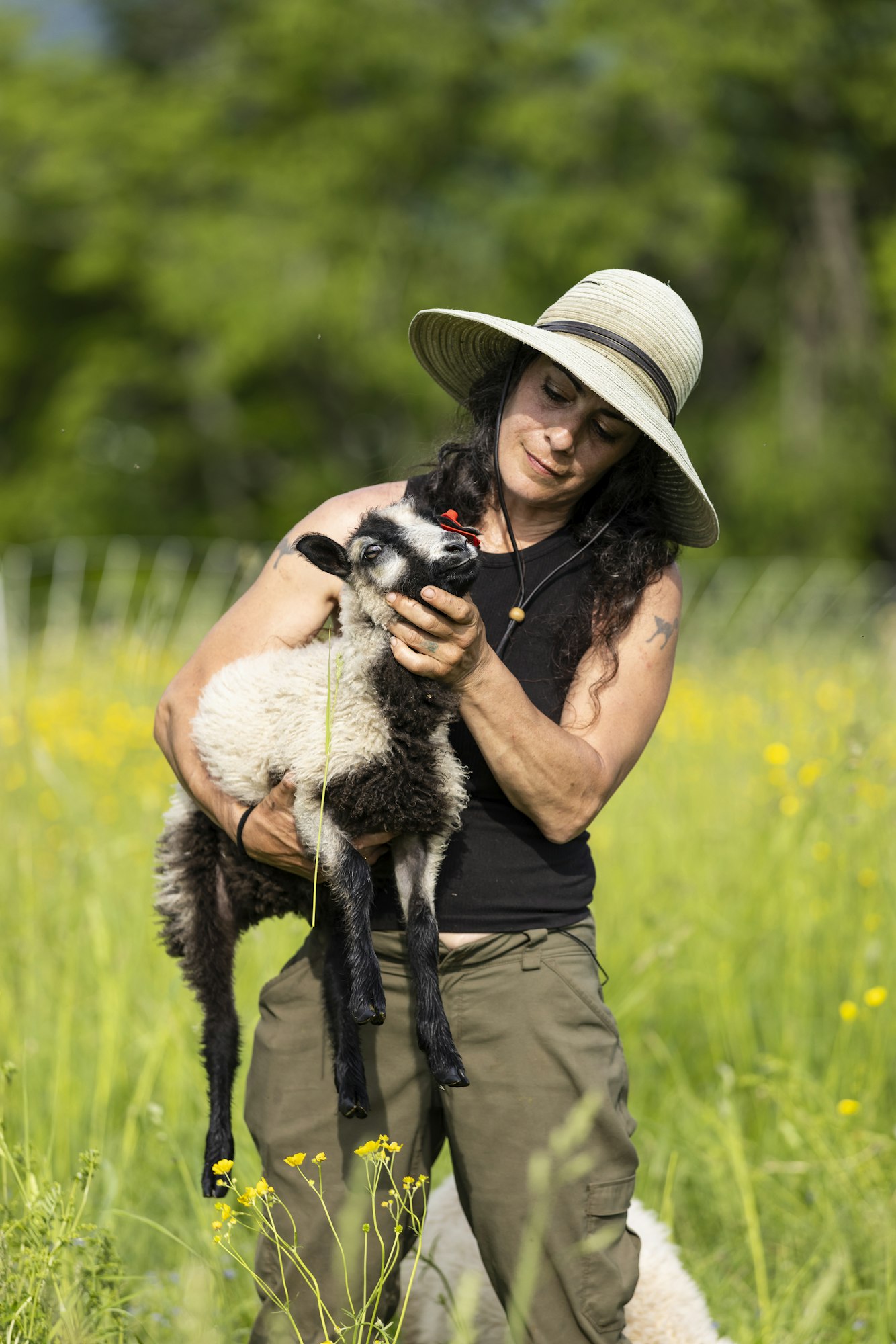
AJ's Happy Chick Farm
By Sue Beshar
Caring for the land, from pasture to packaging
At AJ's Happy Chick Farm, conservation shows up across the operation, from the way animals move across the land to the way fertility is returned to the soil.
Rotational Grazing
Livestock are managed through rotational grazing, giving pasture areas time to rest and recover between grazing periods.
Protecting Water Quality
The farm maintains setback fencing at least 10 feet from streams and uses grassy swales, ditching, and culverts to help manage water movement and reduce impacts to waterways.
Building Healthy Soil
Hay fields are fertilized with wood ash and aged manure rather than synthetic fertilizer. No chemicals are used, and when additional fertility is needed, certified-organic products are used.
The farm also uses a hay boot on its mower to allow for a higher cutting height.
Renewable Energy
Solar panels currently provide about half of the farm's electricity, with plans for a second array.
Less Waste
The farm uses compostable and recyclable packaging materials wherever possible.
Even hide tanning is approached with conservation in mind, using mimosa bark rather than harsh chemicals.
Conservation here isn't one practice. It's a way of looking at the whole farm.


