2026 Locally Led Conservation Community Engagement
Locally Led Conservation is a community-driven process that brings together farmers, landowners, foresters, partners, and residents to identify natural resource priorities, guide conservation planning, and inform funding decisions in Orleans County, Vermont.
This process begins with local input through surveys, community meetings, and partner collaboration, ensuring that conservation efforts reflect real, on-the-ground needs.
2026 Locally Led Community Meeting
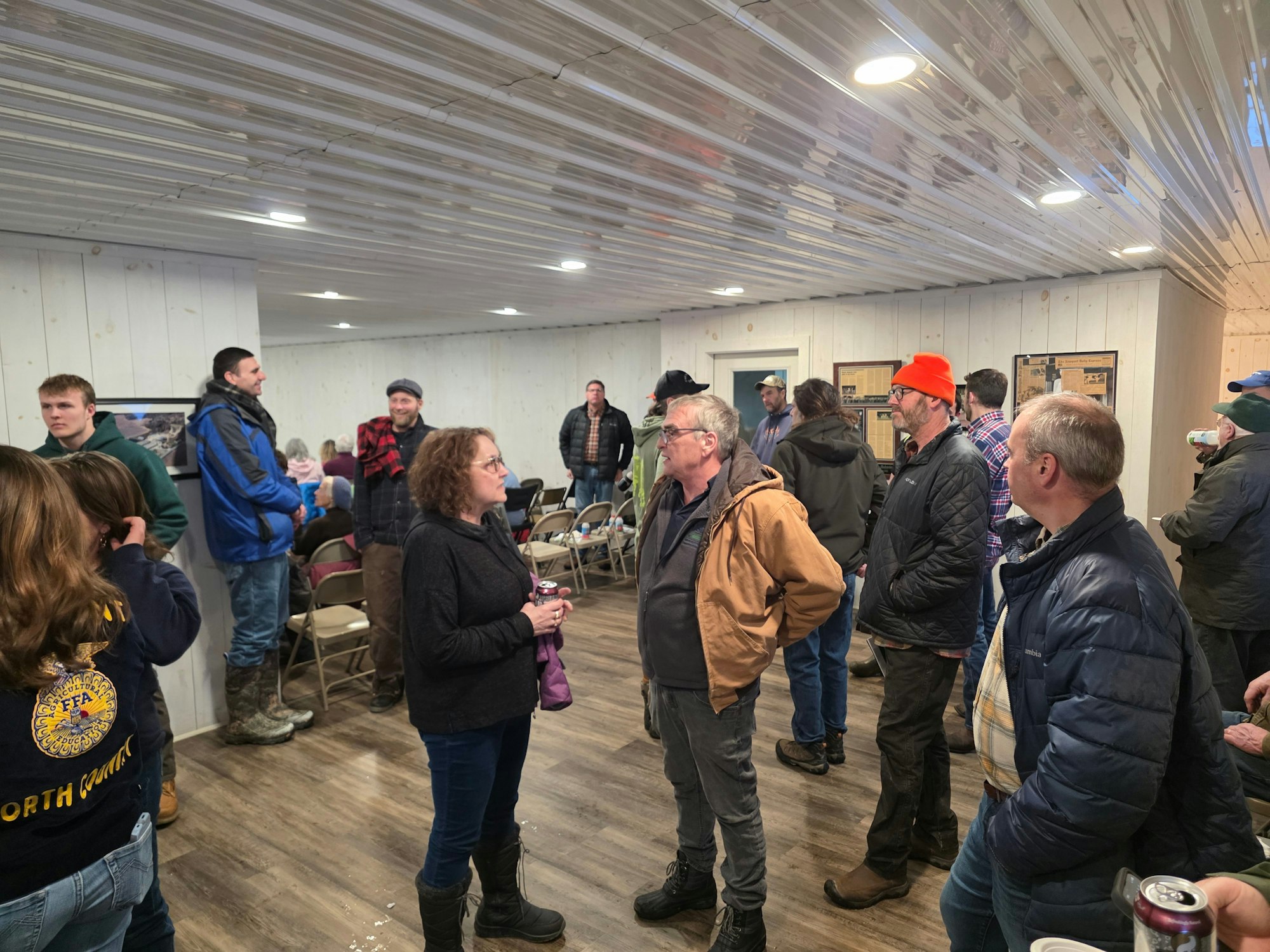
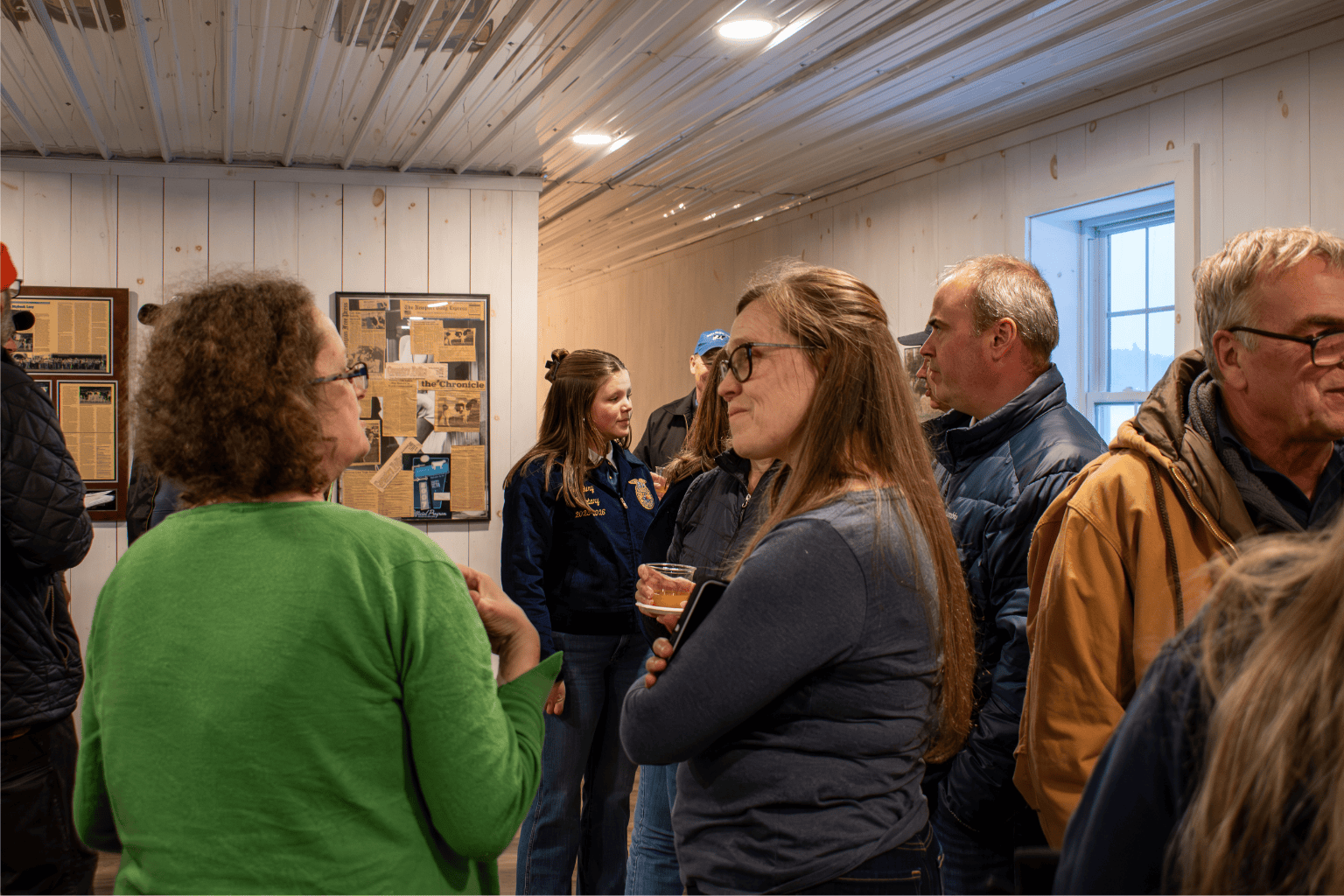
On Wednesday, February 11, 2026, the Orleans County Natural Resources Conservation District (OCNRCD) hosted its Annual Locally Led Community Meeting at Nelson's Farm in Irasburg, Vermont.
This year's theme, "The Evolution of Vermont Agriculture and Conservation," centered on how agriculture continues to adapt to economic, environmental, and technological change, and how conservation evolves alongside it.
The meeting brought together farmers, landowners, conservation partners, and community members to share perspectives and help guide conservation priorities for the year ahead.
Meeting Highlights
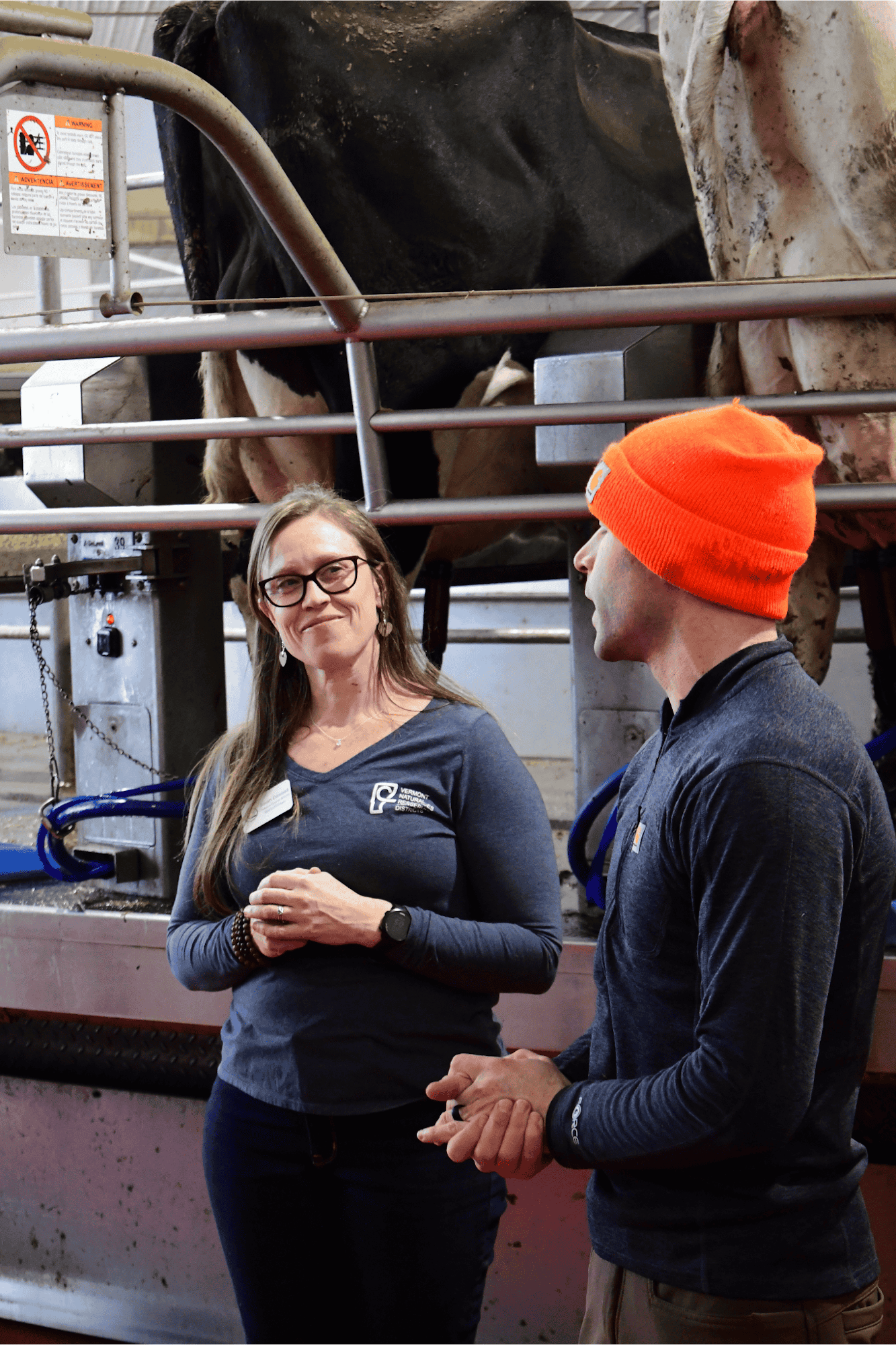
- Farm Tour: Attendees toured Nelson’s Farm’s rotary milking parlor, a large-scale technological investment designed to support modern dairy viability.
- Community Gathering: Participants connected and shared perspectives over locally sourced refreshments.
- OCNRCD Updates: Staff shared updates on Locally Led Conservation efforts and recent work across Orleans County.
- Survey Input: Attendees contributed feedback on natural resource priorities and working lands challenges.
- Guest Speaker: Former Vermont Secretary of Agriculture Roger Allbee presented on the history and evolution of Vermont agriculture, highlighting ongoing challenges in market access, scale, and adaptation, as well as the growing role of conservation in agricultural systems.
Key Themes from 2026
Feedback from the 2026 Locally Led Survey and Community Meeting highlights several consistent priorities and concerns across Orleans County:
👉 View the Full Survey Results Breakdown Report 2026
Water Quality & Climate Resilience as Top Priorities
Water systems, including streams, rivers, and lakes, emerged as the most frequently identified areas of concern. Survey responses show strong emphasis on water quality, erosion control, and flood resilience, with over half of respondents prioritizing funding for clean water, riparian buffers, and wetland protection.
Climate-related challenges, including extreme weather, flooding, and drought, were also among the most commonly cited concerns, reinforcing the need for resilient land and water management strategies.
Balancing Farm Viability with Conservation
Respondents identified economic pressures, rising costs, and long-term farm viability as ongoing challenges for agriculture in the region. At the same time, there is strong support for integrating conservation into working lands, including soil health, regenerative agriculture, and water protection.
Survey responses emphasized the importance of:
- Supporting economically viable farms
- Improving access to land for new and beginning farmers
- Strengthening local food systems and infrastructure.
Forest Health & Invasive Species Management
Concerns related to forest health and invasive species were among the most frequently mentioned natural resource issues. Respondents highlighted the need to protect native ecosystems while actively managing pests, diseases, and long-term forest sustainability.
Strong Value Placed on Natural Resources & Community Character
Participants expressed a deep appreciation for Orleans County's natural beauty, working landscape, and strong sense of community. Many responses reflect a desire to preserve:
- Open land and undeveloped spaces
- Public access to natural areas
- The rural character and close-knit nature of local communities
Need for Funding, Education, & Local Engagement
A major takeaway from the survey is that financial constraints remain the most significant barrier to implementing conservation solutions. Respondents also emphasized the importance of:
- Increased funding and incentives for land stewardship
- Expanded technical assistance and education
- Greater outreach and community engagement
There is clear interest in practical, on-the-ground support, including workshops on soil health, water quality, invasive species management, and climate adaptation.
Locally Led Solutions & Community-Driven Action
Across responses, there was strong support for locally led, community-driven approaches to conservation. Participants highlighted the importance of collaboration, peer learning, and ensuring that solutions are grounded in local knowledge and experience.
The overall vision reflects a future where agriculture remains viable, natural resources are protected, and communities are actively engaged in shaping sustainable outcomes.
👉 View the Full Survey Results Breakdown Report 2026
Why Participate in the Locally Led Process?
1. Influence Change
Community input directly informs conservation priorities and funding decisions.
2. Connect & Collaborate
Engage with farmers, landowners, and conservation partners across the region.
3. Be Heard
Local perspectives shape how natural resource challenges are addressed at the county, state, and federal level.
What Happens Next?
Input gathered through the 2026 survey and community meeting will be used by OCNRCD and partners, including the USDA Natural Resources Conservation Service (NRCS), to:
- Develop conservation priorities for Orleans County
- Inform the NRCS Local Working Group process
- Guide allocation of conservation funding and resources
This work continues to support soil health, water quality, working lands, and resilient agricultural systems across the country.